
Overview
Fasteners are the mechanical elements that hold modern buildings together: screws, nails, bolts, anchors, ties, and connectors. Unlike many other construction materials, fasteners are overwhelmingly made of metal, governed by long-standing engineering standards, and relatively conservative in formulation. As a result, they represent one of the least plastic-dependent categories in contemporary construction.
Where plastics do appear in fasteners, they are typically introduced for secondary functions, like corrosion resistance, electrical isolation, vibration damping, or ease of installation, rather than load-bearing strength. In most structural applications regulated by building codes, plastic fasteners are either prohibited or functionally unsuitable.
Screws, bolts, and nuts

Threaded fasteners
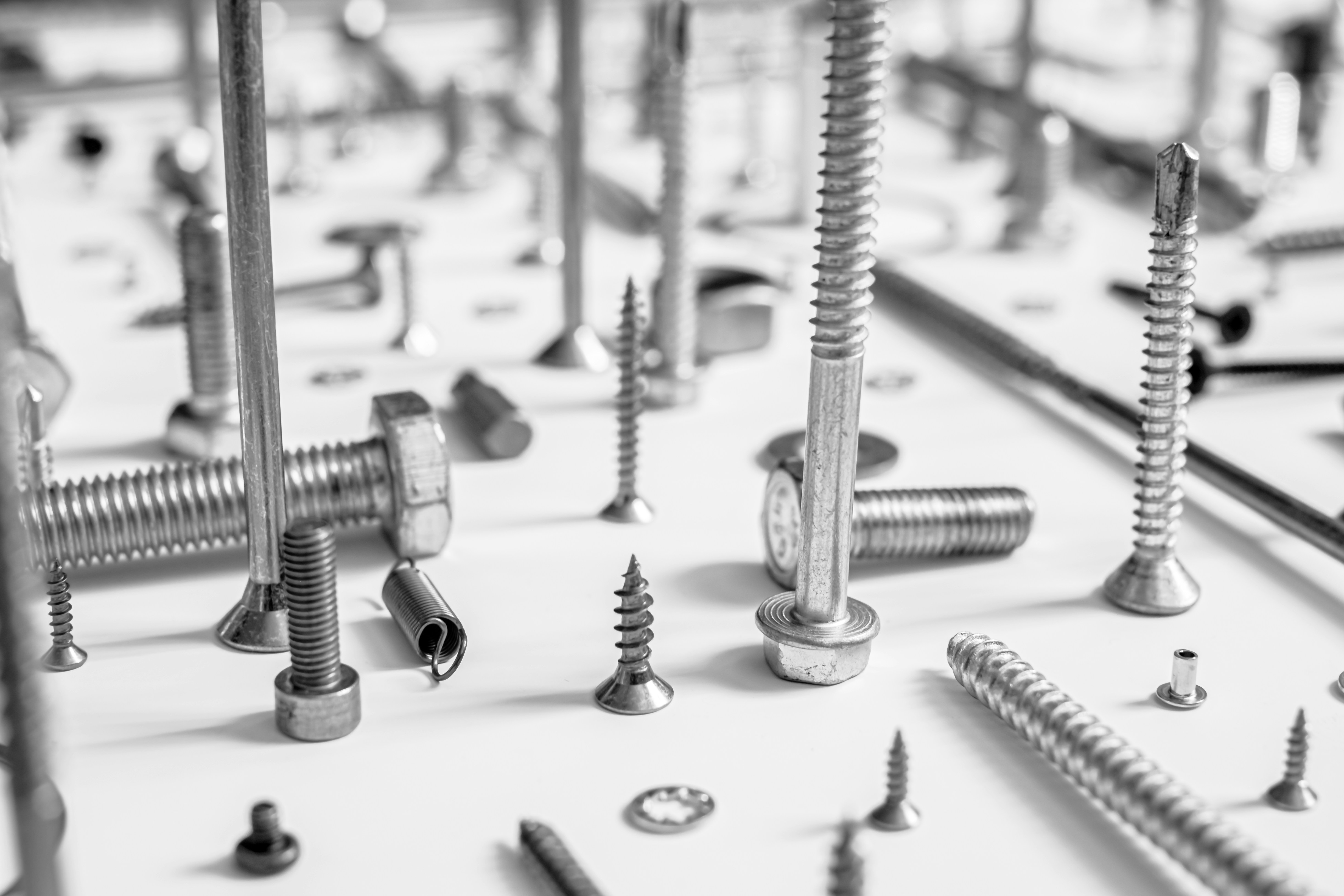
Threaded fasteners such as screws, bolts, and nuts form the backbone of modern mechanical assembly. In construction, these components are almost exclusively manufactured from carbon steel, alloy steel, or stainless steel, often with zinc, phosphate, or oxide surface treatments for corrosion protection. Standards governing their dimensions, strength grades, and material composition are tightly controlled by organizations such as ASTM International and International Organization for Standardization.
Plastic screws and nuts do exist, typically made from nylon or polypropylene, but their use is largely confined to furniture, trim, light fixtures, and electrical enclosures. They are rarely employed in load-bearing construction and are not common in code-regulated structural assemblies. From a plastic-avoidance perspective, threaded fasteners used in buildings are generally a non-issue.
Nails
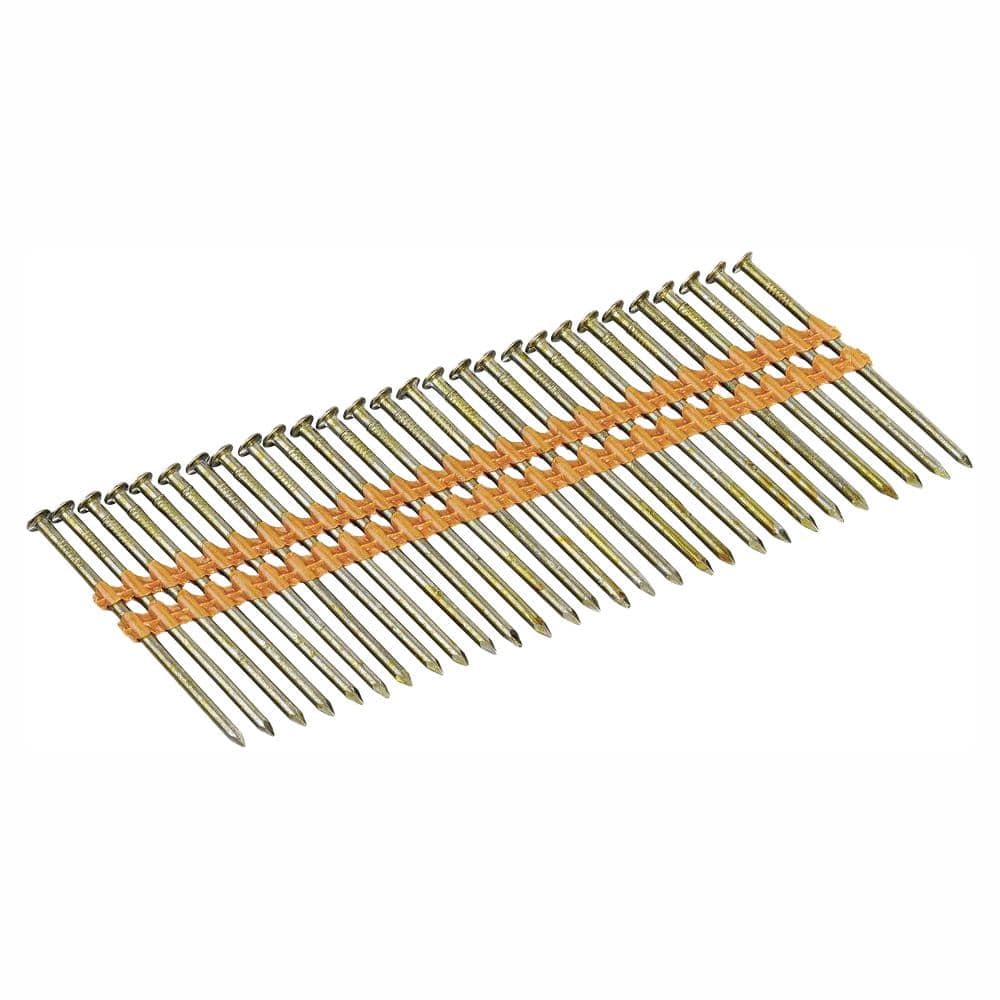
Framing nails
Nails are among the oldest and simplest fasteners still in widespread use. Framing, finish, and masonry nails are almost universally steel, sometimes hardened or galvanized depending on application. Plastic does not play a role in their basic function.
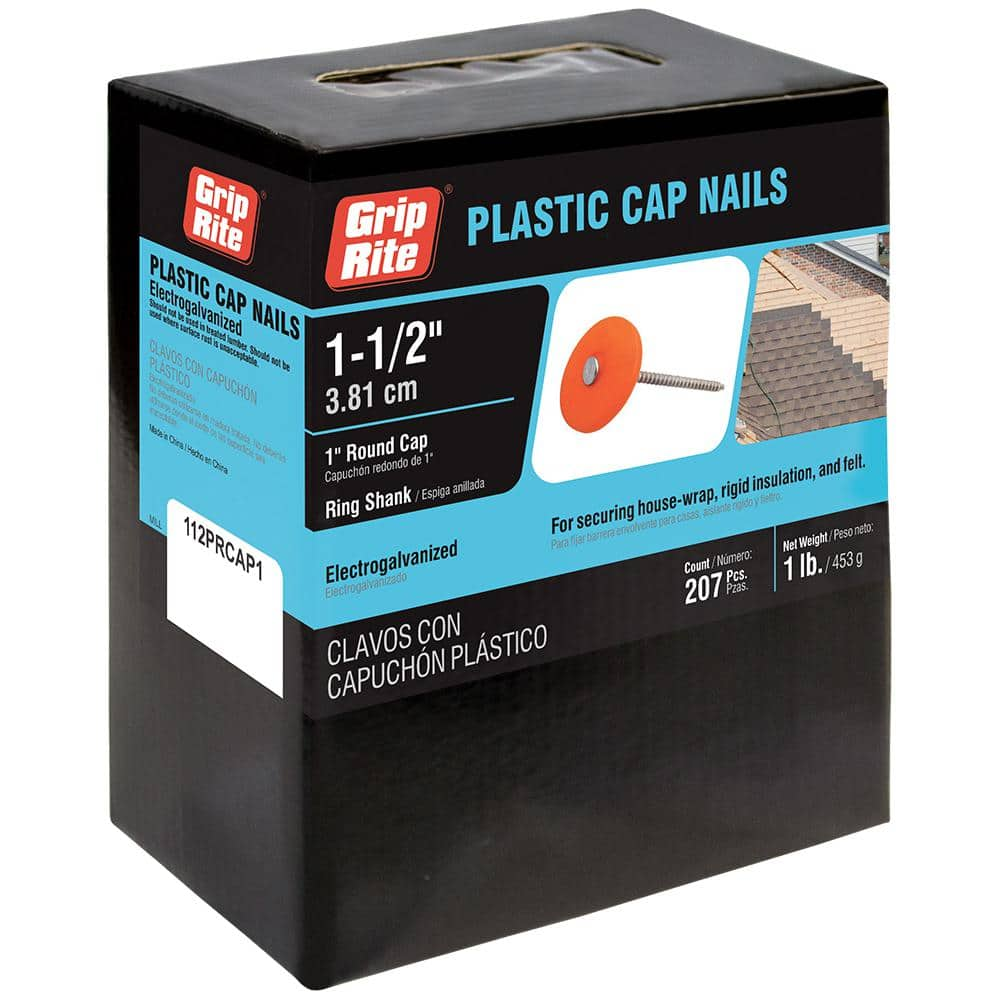
An exception is found in plastic-capped roofing nails, where a polymer disk is added beneath the metal head to increase bearing area and resist tear-through of asphalt shingles. Importantly, equivalent all-metal roofing nails and metal washers are widely available, and plastic caps are not a technical requirement. Their use reflects cost and convenience rather than necessity.
Staples
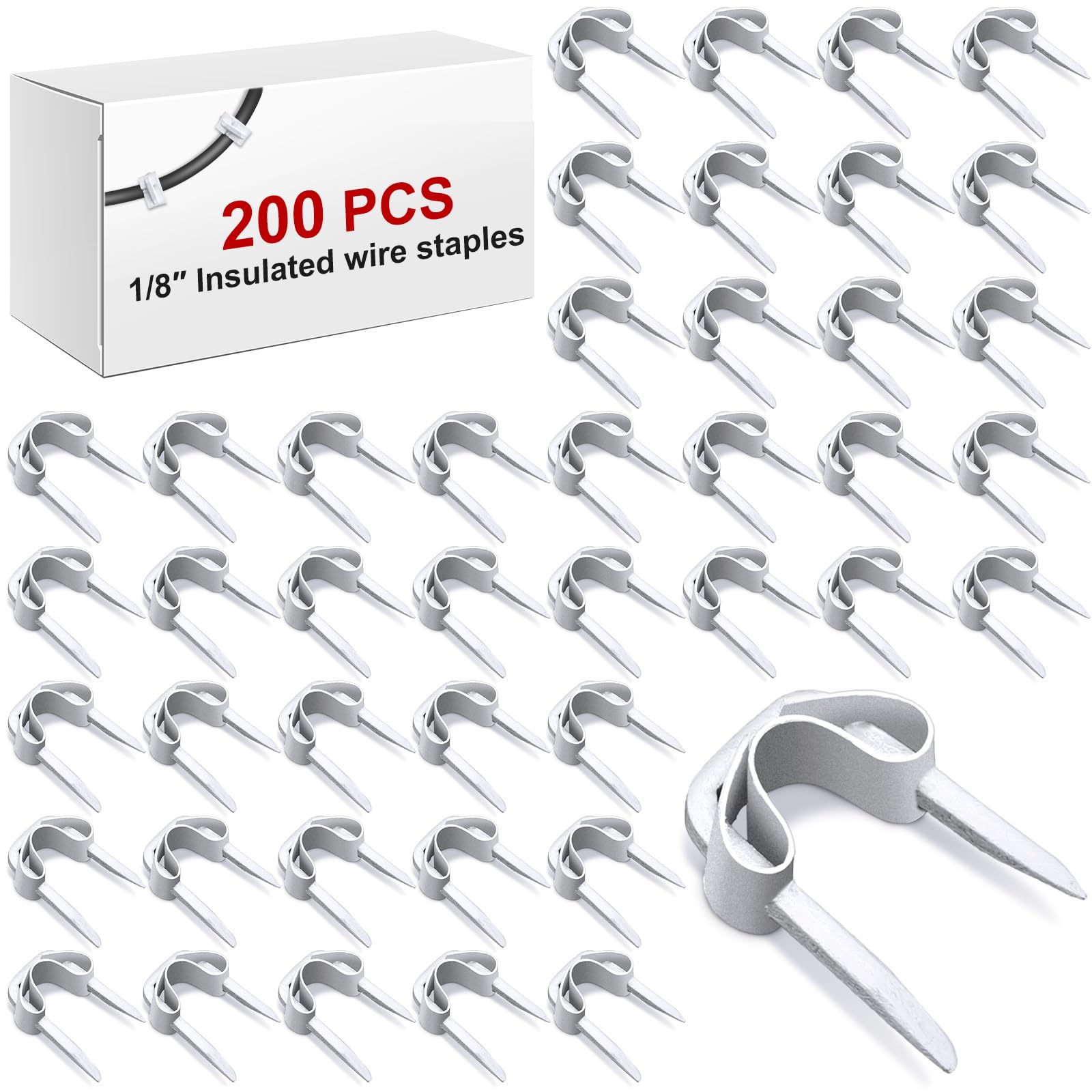
Staples for fastening insulated wire to a substrate may have a strip of plastic to prevent damage to wires.
Construction staples are formed from bent steel wire and used primarily for fencing, sheathing, insulation netting, and lath. Plastic variants are rare in structural or building-scale applications. Staples rely on material ductility and penetration strength, properties for which metals are uniquely suited.
Anchors

Metal self-drilling drywall anchors are inexpensive and widely available.
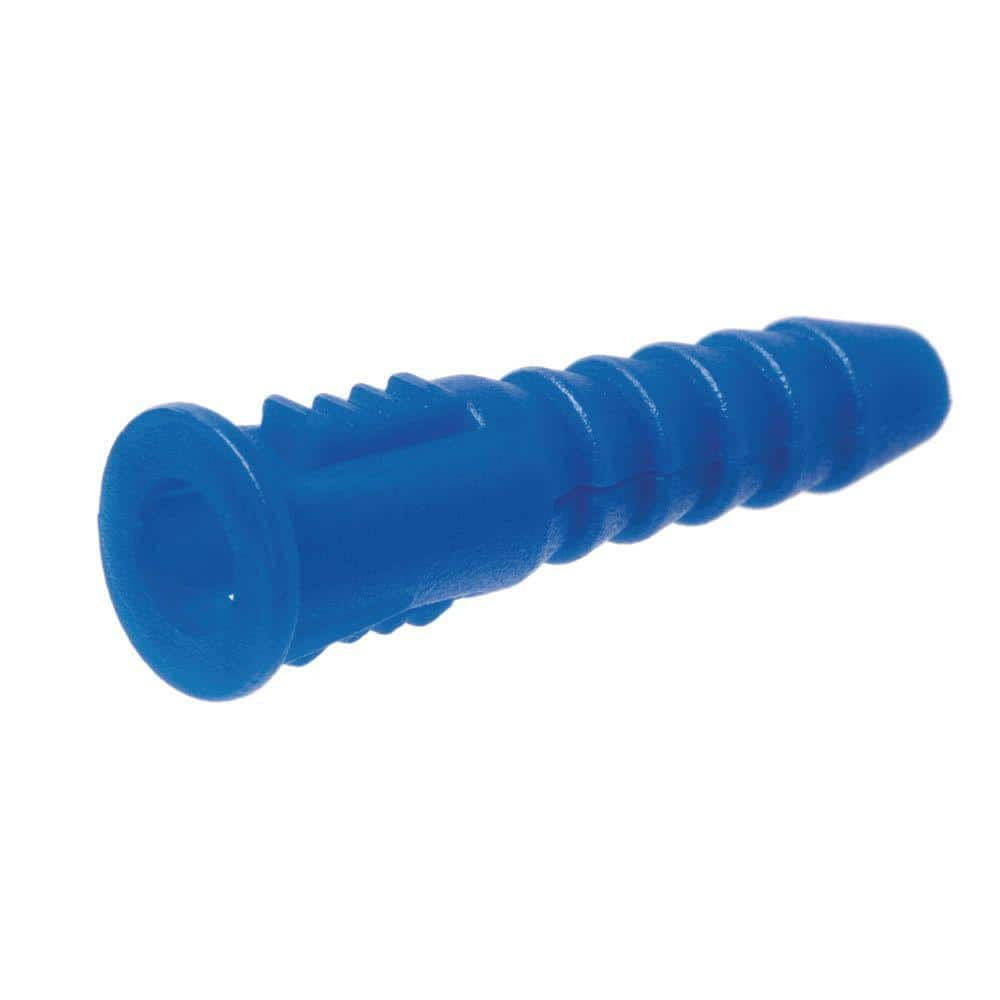
Anchors are used to secure fasteners into materials that cannot directly hold threads, such as drywall, masonry, or concrete. This is the fastener category where plastics are most visible. Common drywall anchors are frequently molded from nylon or similar polymers, which expand or deform to grip materials prone to crumbling.
However, metal alternatives, including expansion anchors, toggle bolts, sleeve anchors, and cast-in concrete anchors, are well established and widely used in commercial construction. Plastic anchors are primarily a convenience product for light-duty residential use. Their elimination in a zero-plastic project is generally straightforward and economically negligible.
Rivets

Plastic rivets
Rivets are permanent fasteners installed by plastically deforming the shank to clamp materials together. In structural steel, bridges, and architectural metalwork, rivets are metal by necessity. Aluminum, steel, and stainless steel dominate this category.
Plastic rivets are used in automotive interiors, appliances, and furniture, where loads are low and environmental exposure is limited. Their role in building construction is marginal, and they are not typical of structural assemblies.
Clips, ties, clamps, and brackets
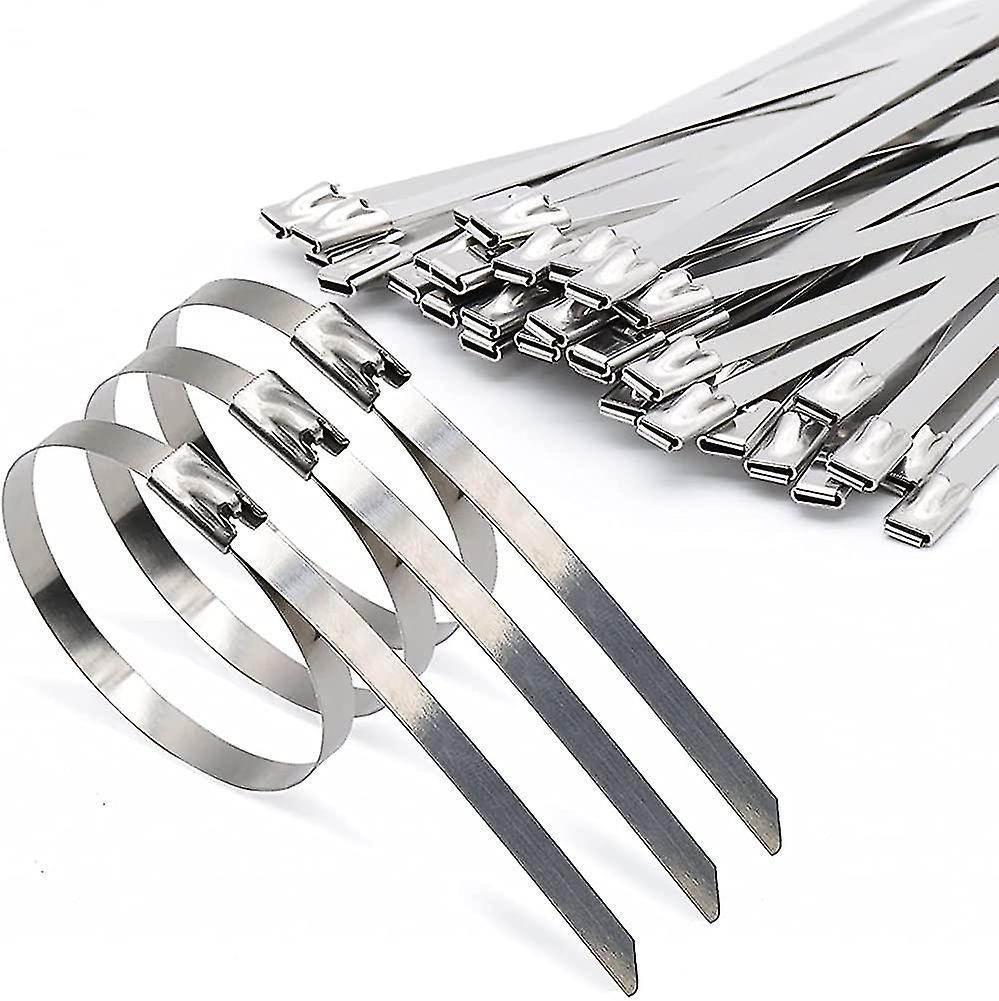
Stainless steel zip ties
This broad category includes cable supports, pipe clamps, strut fittings, and miscellaneous brackets. Both metal and plastic versions are common. The ubiquitous nylon zip tie is perhaps the most visible plastic fastener in everyday use, favored for speed and cost rather than durability.
Metal alternatives, such as stainless steel cable ties, steel clamps, and formed brackets, are readily available and often superior in fire resistance, longevity, and mechanical performance. In permanent construction, plastic versions are generally optional rather than required, and building codes in North America often effectively require the use of metal clamps for electrical conduit and other structural purposes.
Washers and spacers
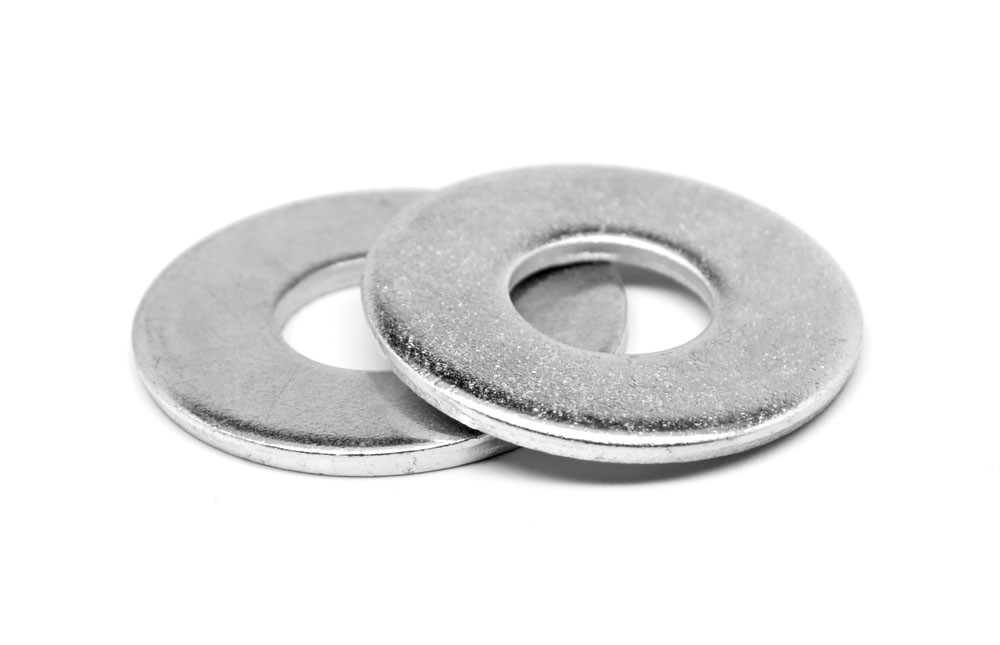
Metal washers
Washers and spacers distribute load, control spacing, or provide electrical isolation. Metal washers are the default in structural and mechanical assemblies. Plastic washers, often nylon, are used where electrical insulation, noise and vibration reduction, or corrosion prevention are required, or in cases where it’s desirable to protect the surface finish of the substrate, like fastening to a painted surface.
In many cases, insulation functions can be achieved through geometry, coatings, or alternative metals, making plastic optional rather than inherent to the fastener type.
Snap-fit and concealed mounting systems are a relatively recent development, designed to allow removable panels and clean surfaces. These systems are frequently plastic-heavy, relying on elastic deformation and molded geometries that are difficult to replicate in metal at low cost. While metal panel clips and hook-and-slot systems exist, snap-style fasteners represent one of the few fastener categories where plastics currently dominate and where plastic-free alternatives are less standardized. Across construction fasteners, plastics are most commonly introduced for: They are rarely used for primary structural strength. In all cases except relatively novel snap systems, metal alternatives exist, are code-compliant, and are already standard in commercial and industrial construction. Compared to other construction materials, fasteners remain a relatively plastic-light domain. Their long history, reliance on standardized metallurgy, and regulatory scrutiny have limited the extent to which synthetic polymers have displaced traditional materials. For zero-plastic or low-plastic construction strategies, fasteners are among the easiest categories to address, requiring more attentiveness than innovation.Snap and panel-mount fastening systems
Zero-plastic options